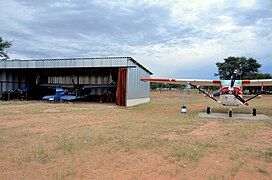
A hangár is a closed building structure to hold repülőgép or űrhajó. Hangars are built of metal, wood, or concrete. The word hangár comes from Middle French hanghart ("enclosure near a house"), of Germanic origin, from Frankish haimgard ("home-enclosure", "fence around a group of houses"), from haim ("home, village, hamlet") and gard ("yard"). gard comes from the Old Norse garðr ("enclosure, garden").
A hangárokat az időjárás, a közvetlen napsugárzás elleni védelemre, valamint a repülőgépek karbantartására, javítására, gyártására, összeszerelésére és tárolására használják.
Tartalom
Történelem
 | This article needs additional citations for igazolás. Please help javítani ezt a cikket by hivatkozások hozzáadása a megbízható forrásokhoz. A forrás nélküli anyagok megtámadhatók és eltávolíthatók. Források keresése: "Hangar" – hírek · újságok · könyveket · tudós · JSTOR (2019. augusztus) (További információ arról, hogyan és mikor távolítsa el ezt a sablonüzenetet) |
 The Wright Flyer outside the aircraft's makeshift hangar
The Wright testvérek stored and repaired their aircraft in a wooden hangar constructed in 1902 at Öld meg Devil Hillst in Észak-Karolina for their vitorlázó repülőgép. After completing design and construction of the Wright Flyer in Ohio, the brothers returned to Kill Devil Hills only to find their hangar damaged. They repaired the structure and constructed a new workshop while they waited for the Szórólap to be shipped.
 Carl Richard Nyberg's hangar for his Flugan (fly) from 1908, Täcka udden in Lidingö, Svédország
Carl Richard Nyberg used a hangar to store his 1908 Flugan (fly) in the early 20th century and in 1909, Louis Bleriot crash-landed on a northern French farm in Les Baraques (between Sangatte and Calais) and rolled his monoplán into the farmer's cattle pen. Bleriot was in a race to be the first man to cross the angol csatorna in a nehezebb-a-levegőnél aircraft, and he and set up his headquarters in the unused shed. In Britain, the earliest aircraft hangars were known as repülőgép ólak, and the oldest survivors of these are at Larkhill, Wiltshire. These were built in 1910 for the Bristol School of Flying and are now Grade II Műemlék épületek. British aviation pioneer Alliott Verdon Roe built one of the first aeroplane sheds in 1907 at Brooklands, Surrey and full-size replicas of this and the 1908 Roe biplane are on display at Brooklands Múzeum.
As aviation became established in Britain before World War I, standard designs of hangar gradually appeared with military types too such as the Bessonneau hangár and the side-opening aeroplane shed of 1913, both of which were soon adopted by the Királyi Repülő Hadtest. Examples of the latter survive at Farnborough, Filton and Montrose airfields. During World War I, other standard designs included the RFC General Service Flight Shed and the Admiralty F-Type of 1916, the General Service Shed (featuring the characteristic Belfast{0}}rács roof and built-in various sizes) and the Handley oldal aeroplane shed (1918).
Építkezés
Acel szerkezetszerkeszteni
Sheds built for rigid airships survive at Moffett Field, Kalifornia; Akron, Ohio; Weeksville, Észak-Karolina; Lakehurst, New Jersey; Santa Cruz légibázis in Brazil; and Cardington, Bedfordshire. Az acél merev léghajó hangárok a világ legnagyobbjai közé tartoznak.
Hangar 1, Lakehurst, is located at Lakehurst haditengerészeti légimérnöki állomás (formerly Naval Air Station Lakehurst), New Jersey. The structure was completed in 1921 and is typical of airship hangar designs of World War I. The site is best known for the Hindenburg disaster, when on May 6, 1937, the German airship Hindenburg crashed and burned while landing. Hangar No.1 at Lakehurst was used to build and store the American USS Shenandoah. The hangar also provided service and storage for the airships USS Los Angeles, Akron, Macon, as well as the Graf Zeppelin and the Hindenburg.
The largest hangars ever built include the Goodyear Airdock measuring 1,175x325x211 feet1 and Hangar One (Mountain View, Kalifornia) measuring 1,133 ft 308 ft 198 ft (345 m 94 m 60 m). The Goodyear Airdock, is in Akron, Ohio and the structure was completed on November 25, 1929. The Airdock was used for the construction of the USS Akron and her sister ship, the USS Macon.
Hangar One at Moffett Federal Field (formerly Naval Air Station Moffett Field), is located in hegyi kilátás, California. The structure was completed in 1931. It housed the USS Macon.
Szövet felépítés
Main article: CargoLifter
A hangar for Cargolifter was built at Brand-Briesen repülőtér 1,180 ft (360 m) long, 705 ft (215 m) wide and 348 ft (106 m) high and is a free standing steel-dome "barrel-bowl" construction large enough to fit the Eiffel-torony on its side. The company went into fizetésképtelenség and in June 2003, the facilities were sold off and the léghajó hangár was converted to a 'tropical paradise'-themed indoor holiday resort called Trópusi szigetek, amely 2004-ben nyílt meg.
An alternative to the fixed hangar is a portable shelter that can be used for aircraft storage and maintenance. Portable szövetszerkezetek can be built up to 215 ft (66 m) wide, 100 ft (30 m) high and any length. They are able to accommodate several aircraft and can be increased in size and even relocated when necessary.idézet szükséges
Szerkezetek és méretek
A hangárok speciális építményeket igényelnek. Az ajtók szélességének nagynak kell lennie; ide tartozik a repülőgép bejárata is. Minél nagyobb a bevezetendő repülőgép, annál összetettebb szerkezetre van szükség. A hangár fesztávja szerint a méretek a következőképpen csoportosíthatók:
| Méret | Fesztáv (méter) |
|---|---|
| S | Kevesebb, mint 30 m |
| M | 30–60 m |
| L | 60–90 m |
| XL | 90–120 m |
| XXL | Több mint 120 m |
XXL hangars are built for the largest aircraft in the world like the Airbus A380, Boeing 747 and the Antonov 225, amelyek felállítása a legbonyolultabb.4
Szabályozás
A hangárokat általában a lakóhelyük szerinti országok, joghatóságok és repülőterek építési szabályzatai szabályozzák. 2014 augusztusában az amerikai FAA jogszabályt javasolt arról, hogyan használhatók hangárok azokon a repülőtereken, amelyek állami támogatásban részesülnek. Az engedélyezett tevékenységek meghatározása magában foglalta a repülőgépek végső összeszerelését.5
Léghajó hangárok
Léghajó hangárok or airship sheds are generally larger than conventional aircraft hangars, particularly in height. Most early airships used hidrogén gas to provide them with sufficient buoyancy for flight, so their hangars had to provide protection from stray sparks to keep the gas from exploding. Hangars that held several airships were at risk from chain-reaction explosions. For this reason, most hangars for hydrogen-based airships were built to house only one or two such craft. During the "Golden Age" of airship travel from 1900, mooring masts and sheds were constructed to build and house airships. The British government built a shed in Karacsi for the R101, the Brazilian government built one in Rio de Janeiro, the pt: Hangar do Zeppelin for the German Zeppelinek, and the U.S. government constructed Moffett Field, hegyi kilátás, California and Lakehurst Naval Air Station, Lakehurst, New Jersey.
Hangárok a hajók fedélzetén
 The helicopter hangar of an Akizuki-osztály romboló.
Many hadihajók carry aircraft and will often have hangars for storage and maintenance. Such hangars may be situated adjacent to the pilótafülkéből on cirkálók, rombolók and fregattok or underneath the flight deck with liftek to lift the aircraft on repülőgép anyahajók and kétéltű rohamhajók. Egyes hajókon, ahol kevés a hely, a hangár és a pilótafülke ugyanazon a területen osztozik, a hangár pedig repülési műveletekre van elhelyezve.
Képtár
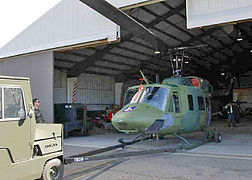
Hangars can hold rögzített{0}}szárnyú repülőgép, forgószárnyú-repülőgép (helikopterek), and könnyebb-, mint-a légi hajók.
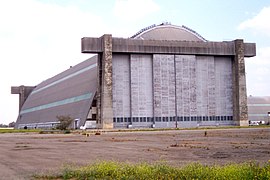
2. számú hangár at the former Tengerészgyalogság Tustin légiállomása is 1,072 ft (327 m) long, 292 ft (89 m) wide and 192 ft (59 m) tall.

Egy Airbus A319-es karbantartás alatt áll egy hangárban.
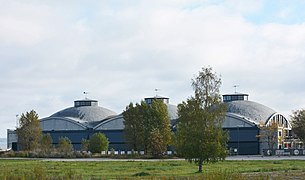
Hangars for hidroplánok of the Orosz Birodalmi Légierő in Tallinn harbor - some of the first vasbeton structures

A General Dynamics F-16 Fighting Falcon in front of a Edzett repülõgép menedékhely, egy speciális hangártípus
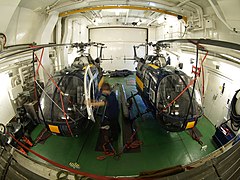
Helicopter hangar of the German research vessel Polarstern

A medium-sized aircraft hangar at Kemble repülőtér, Anglia

Hangar of Iberia Airlines (XXL-150m span) Barcelona repülőtér, Spanyolország
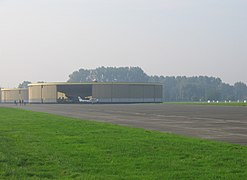
Round concrete hangars at Grimbergen Repülőtér, Belgium.